''the People's Paths home page!''
Copyright © 1998 NLThomas
All Rights Reserved


Teaching About Thanksgiving

As Provided by the
Fourth World Documentation Project


Contents: Teaching About Thanksgiving
  1. Teaching About Thanksgiving
  2. Introduction for Teachers
  3. The Plymouth Thanksgiving Story
  4. Study & Discussion Questions
  5. Ideas for Enrichment
  6. How to Avoid Old Stereotypes
  7. Bibliography
  8. A Thanksgiving Prayer
  9. Indian corn
  10. Recipes from the Woodland Culture Area
  11. Story of the Corn Husk Doll


        T E A C H I N G   A B O U T   T H A N K S G I V I N G

                        Dr. Frank B. Brouillet
                 Superintendent of Public Instruction
                         State of Washington

                             Cheryl Chow
                       Assistant Superintendent
           Division of Instructional Programs and Services

                           Warren H. Burton
                               Director
            Office for Multicultural and Equity Education

                         Dr. Willard E. Bill
                    Supervisor of Indian Education

                 Originally written and developed by
     Cathy Ross, Mary Robertson, Chuck Larsen, and Roger Fernandes
              Indian Education, Highline School District

                       With an introduction by:
                             Chuck Larsen
                        Tacoma School District

                       Printed: September, 1986
                         Reprinted: May, 1987

                   AN INTRODUCTION FOR TEACHERS

          This is a particularly difficult introduction to 
     write. I have been a public schools teacher for twelve 
     years, and I am also a historian and have written several 
     books on American and Native American history. I also just 
     happen to be Quebeque French, Metis, Ojibwa, and Iroquois. 
     Because my Indian ancestors were on both sides of the 
     struggle between the Puritans and the New England Indians 
     and I am well versed in my cultural heritage and history 
     both as an Anishnabeg (Algokin) and Hodenosione (Iroquois), 
     it was felt that I could bring a unique insight to the 
     project. 

          For an Indian, who is also a school teacher, 
     Thanksgiving was never an easy holiday for me to deal with 
     in class. I sometimes have felt like I learned too much 
     about "the Pilgrims and the Indians." Every year I have 
     been faced with the professional and moral dilemma of just 
     how to be honest and informative with my children at 
     Thanksgiving without passing on historical distortions, and 
     racial and cultural stereotypes. 

          The problem is that part of what you and I learned in 
     our own childhood about the "Pilgrims" and "Squanto" and 
     the "First Thanksgiving" is a mixture of both history and 
     myth. But the THEME of Thanksgiving has truth and integrity 
     far above and beyond what we and our forebearers have made 
     of it. Thanksgiving is a bigger concept than just the story 
     of the founding of the Plymouth Plantation. 

          So what do we teach to our children? We usually pass 
     on unquestioned what we all received in our own childhood 
     classrooms. I have come to know both the truths and the 
     myths about our "First Thanksgiving," and I feel we need to 
     try to reach beyond the myths to some degree of historic 
     truth. This text is an attempt to do this. 

          At this point you are probably asking, "What is the 
     big deal about Thanksgiving and the Pilgrims?" "What does 
     this guy mean by a mixture of truths and myth?" That is 
     just what this introduction is all about. I propose that 
     there may be a good deal that many of us do not know about 
     our Thanksgiving holiday and also about the "First 
     Thanksgiving" story. I also propose that what most of us 
     have learned about the Pilgrims and the Indians who were at 
     the first Thanksgiving at Plymouth Plantation is only part 
     of the truth. When you build a lesson on only half of the 
     information, then you are not teaching the whole truth. 
     That is why I used the word myth. So where do you start to 
     find out more about the holiday and our modern stories 
     about how it began? 

          A good place to start is with a very important book, 
     "The Invasion of America," by Francis Jennings. It is a 
     very authoritative text on the settlement of New England 
     and the evolution of Indian/White relations in the New 
     England colonies. I also recommend looking up any good text 
     on British history. Check out the British Civil War of 
     1621-1642, Oliver Cromwell, and the Puritan uprising of 
     1653 which ended parliamentary government in England until 
     1660. The history of the Puritan experience in New England 
     really should not be separated from the history of the 
     Puritan experience in England. You should also realize that 
     the "Pilgrims" were a sub sect, or splinter group, of the 
     Puritan movement. They came to America to achieve on this 
     continent what their Puritan bretheran continued to strive 
     for in England; and when the Puritans were forced from 
     England, they came to New England and soon absorbed the 
     original "Pilgrims." 

          As the editor, I have read all the texts listed in our 
     bibliography, and many more, in preparing this material for 
     you. I want you to read some of these books. So let me use 
     my editorial license to deliberately provoke you a little. 
     When comparing the events stirred on by the Puritans in 
     England with accounts of Puritan/Pilgrim activities in New 
     England in the same era, several provocative things suggest 
     themselves: 

     1. The Puritans were not just simple religious 
        conservatives persecuted by the King and the Church of 
        England for their unorthodox beliefs. They were 
        political revolutionaries who not only intended to 
        overthrow the government of England, but who actually 
        did so in 1649.                                       

     2. The Puritan "Pilgrims" who came to New England were not 
        simply refugees who decided to "put their fate in God's 
        hands" in the "empty wilderness" of North America, as a 
        generation of Hollywood movies taught us. In any culture 
        at any time, settlers on a frontier are most often 
        outcasts and fugitives who, in some way or other, do not 
        fit into the mainstream of their society. This is not to 
        imply that people who settle on frontiers have no 
        redeeming qualities such as bravery, etc., but that the 
        images of nobility that we associate with the Puritans 
        are at least in part the good "P.R." efforts of later 
        writers who have romanticized them.(1) It is also very 
        plausible that this unnaturally noble image of the 
        Puritans is all wrapped up with the mythology of "Noble 
        Civilization" vs. "Savagery."(2) At any rate, mainstream 
        Englishmen considered the Pilgrims to be deliberate 
        religious dropouts who intended to found a new nation 
        completely independent from non-Puritan England. In 1643 
        the Puritan/Pilgrims declared themselves an independent 
        confederacy, one hundred and forty-three years before 
        the American Revolution. They believed in the imminent 
        occurrence of Armegeddon in Europe and hoped to 
        establish here in the new world the "Kingdom of God" 
        foretold in the book of Revelation. They diverged from 
        their Puritan brethren who remained in England only in 
        that they held little real hope of ever being able to 
        successfully overthrow the King and Parliament and, 
        thereby, impose their "Rule of Saints" (strict Puritan 
        orthodoxy) on the rest of the British people. So they 
        came to America not just in one ship (the Mayflower) but 
        in a hundred others as well, with every intention of 
        taking the land away from its native people to build 
        their prophesied "Holy Kingdom."(3)

     3. The Pilgrims were not just innocent refugees from 
        religious persecution. They were victims of bigotry in 
        England, but some of them were themselves religious 
        bigots by our modern standards. The Puritans and the 
        Pilgrims saw themselves as the "Chosen Elect" mentioned 
        in the book of Revelation. They strove to "purify" first 
        themselves and then everyone else of everything they did 
        not accept in their own interpretation of scripture. 
        Later New England Puritans used any means, including 
        deceptions, treachery, torture, war, and genocide to 
        achieve that end.(4) They saw themselves as fighting a 
        holy war against Satan, and everyone who disagreed with 
        them was the enemy. This rigid fundamentalism was 
        transmitted to America by the Plymouth colonists, and it 
        sheds a very different light on the "Pilgrim" image we 
        have of them. This is best illustrated in the written 
        text of the Thanksgiving sermon delivered at Plymouth in 
        1623 by "Mather the Elder." In it, Mather the Elder gave 
        special thanks to God for the devastating plague of 
        smallpox which wiped out the majority of the Wampanoag 
        Indians who had been their benefactors. He praised God 
        for destroying "chiefly young men and children, the very 
        seeds of increase, thus clearing the forests to make way 
        for a better growth", i.e., the Pilgrims.(5) In as much 
        as these Indians were the Pilgrim's benefactors, and 
        Squanto, in particular, was the instrument of their 
        salvation that first year, how are we to interpret this 
        apparent callousness towards their misfortune?

     4. The Wampanoag Indians were not the "friendly savages" 
        some of us were told about when we were in the primary 
        grades. Nor were they invited out of the goodness of the 
        Pilgrims' hearts to share the fruits of the Pilgrims' 
        harvest in a demonstration of Christian charity and 
        interracial brotherhood. The Wampanoag were members of a 
        widespread confederacy of Algonkian-speaking peoples 
        known as the League of the Delaware. For six hundred 
        years they had been defending themselves from my other 
        ancestors, the Iroquois, and for the last hundred years 
        they had also had encounters with European fishermen and 
        explorers but especially with European slavers, who had 
        been raiding their coastal villages.(6) They knew 
        something of the power of the white people, and they did 
        not fully trust them. But their religion taught that 
        they were to give charity to the helpless and 
        hospitality to anyone who came to them with empty 
        hands.(7) Also, Squanto, the Indian hero of the 
        Thanksgiving story, had a very real love for a British 
        explorer named John Weymouth, who had become a second 
        father to him several years before the Pilgrims arrived 
        at Plymouth. Clearly, Squanto saw these Pilgrims as 
        Weymouth's people.(8) To the Pilgrims the Indians were 
        heathens and, therefore, the natural instruments of the 
        Devil. Squanto, as the only educated and baptized 
        Christian among the Wampanoag, was seen as merely an 
        instrument of God, set in the wilderness to provide for 
        the survival of His chosen people, the Pilgrims. The 
        Indians were comparatively powerful and, therefore, 
        dangerous; and they were to be courted until the next 
        ships arrived with more Pilgrim colonists and the 
        balance of power shifted. The Wampanoag were actually 
        invited to that Thanksgiving feast for the purpose of 
        negotiating a treaty that would secure the lands of the 
        Plymouth Plantation for the Pilgrims. It should also be 
        noted that the INDIANS, possibly out of a sense of 
        charity toward their hosts, ended up bringing the 
        majority of the food for the feast.(9)

     5. A generation later, after the balance of power had 
        indeed shifted, the Indian and White children of that 
        Thanksgiving were striving to kill each other in the 
        genocidal conflict known as King Philip's War. At the 
        end of that conflict most of the New England Indians 
        were either exterminated or refugees among the French in 
        Canada, or they were sold into slavery in the Carolinas 
        by the Puritans. So successful was this early trade in 
        Indian slaves that several Puritan ship owners in Boston 
        began the practice of raiding the Ivory Coast of Africa 
        for black slaves to sell to the proprietary colonies of 
        the South, thus founding the American-based slave 
        trade.(10)                                   

          Obviously there is a lot more to the story of 
     Indian/Puritan relations in New England than in the 
     thanksgiving stories we heard as children. Our contemporary 
     mix of myth and history about the "First" Thanksgiving at 
     Plymouth developed in the 1890s and early 1900s. Our 
     country was desperately trying to pull together its many 
     diverse peoples into a common national identity. To many 
     writers and educators at the end of the last century and 
     the beginning of this one, this also meant having a common 
     national history. This was the era of the "melting pot" 
     theory of social progress, and public education was a major 
     tool for social unity. It was with this in mind that the 
     federal government declared the last Thursday in November 
     as the legal holiday of Thanksgiving in 1898. 

          In consequence, what started as an inspirational bit 
     of New England folklore, soon grew into the full-fledged 
     American Thanksgiving we now know. It emerged complete with 
     stereotyped Indians and stereotyped Whites, incomplete 
     history, and a mythical significance as our "First 
     Thanksgiving." But was it really our FIRST American 
     Thanksgiving? 

          Now that I have deliberately provoked you with some 
     new information and different opinions, please take the 
     time to read some of the texts in our bibliography. I want 
     to encourage you to read further and form your own 
     opinions. There really is a TRUE Thanksgiving story of 
     Plymouth Plantation. But I strongly suggest that there 
     always has been a Thanksgiving story of some kind or other 
     for as long as there have been human beings. There was also 
     a "First" Thanksgiving in America, but it was celebrated 
     thirty thousand years ago.(11) At some time during the New 
     Stone Age (beginning about ten thousand years ago) 
     Thanksgiving became associated with giving thanks to God 
     for the harvests of the land. Thanksgiving has always been 
     a time of people coming together, so thanks has also been 
     offered for that gift of fellowship between us all. Every 
     last Thursday in November we now partake in one of the 
     OLDEST and most UNIVERSAL of human celebrations, and THERE 
     ARE MANY THANKSGIVING STORIES TO TELL. 

          As for Thanksgiving week at Plymouth Plantation in 
     1621, the friendship was guarded and not always sincere, 
     and the peace was very soon abused. But for three days in 
     New England's history, peace and friendship were there. 

          So here is a story for your children. It is as kind 
     and gentle a balance of historic truth and positive 
     inspiration as its writers and this editor can make it out 
     to be. I hope it will adequately serve its purpose both for 
     you and your students, and I also hope this work will 
     encourage you to look both deeper and farther, for 
     Thanksgiving is Thanksgiving all around the world. 

     Chuck Larsen
     Tacoma Public Schools
     September, 1986

     FOOTNOTES FOR TEACHER INTRODUCTION

          (1)  See Berkhofer, Jr., R.F., "The White Man's 
     Indian," references to Puritans, pp. 27, 80-85, 90, 104, & 
     130. 

          (2)  See Berkhofer, Jr., R.F., "The White Man's 
     Indian," references to frontier concepts of savagery in 
     index. Also see Jennings, Francis, "The Invasion of 
     America," the myth of savagery, pp. 6-12, 15-16, & 109-110. 

          (3) See Blitzer, Charles, "Age of Kings," Great Ages 
     of Man series, references to Puritanism, pp. 141, 144 & 
     145-46. Also see Jennings, Francis, "The Invasion of 
     America," references to Puritan human motives, pp. 4-6, 43-
     44 and 53. 

          (4) See "Chronicles of American Indian Protest," pp. 
     6-10. Also see Armstrong, Virginia I., "I Have Spoken," 
     reference to Cannonchet and his village, p. 6. Also see 
     Jennings, Francis, "The Invasion of America," Chapter 9 
     "Savage War," Chapter 13 "We must Burn Them," and Chapter 
     17 "Outrage Bloody and Barbarous." 

          (5) See "Chronicles of American Indian Protest," pp. 
     6-9. Also see Berkhofer, Jr., R.F., "The White Man's 
     Indian," the comments of Cotton Mather, pp. 37 & 82-83. 

          (6) See Larsen, Charles M., "The Real Thanksgiving," 
     pp. 3-4. Also see Graff, Steward and Polly Ann, "Squanto, 
     Indian Adventurer." Also see "Handbook of North American 
     Indians," Vol. 15, the reference to Squanto on p. 82. 

          (7) See Benton-Banai, Edward, "The Mishomis Book," as 
     a reference on general "Anishinabe" (the Algonkin speaking 
     peoples) religious beliefs and practices. Also see Larsen, 
     Charles M., "The Real Thanksgiving," reference to religious 
     life on p. 1. 

          (8) See Graff, Stewart and Polly Ann, "Squanto, Indian 
     Adventurer." Also see Larsen, Charles M., "The Real 
     Thanksgiving." Also see Bradford, Sir William, "Of Plymouth 
     Plantation," and "Mourt's Relation." 

          (9) See Larsen, Charles M., "The Real Thanksgiving," 
     the letter of Edward Winslow dated 1622, pp. 5-6. 

          (10) See "Handbook of North American Indians," Vol. 
     15, pp. 177-78. Also see "Chronicles of American Indian 
     Protest," p. 9, the reference to the enslavement of King 
     Philip's family. Also see Larsen, Charles, M., "The Real 
     Thanksgiving," pp. 8-11, "Destruction of the Massachusetts 
     Indians." 

          (11) Best current estimate of the first entry of 
     people into the Americas confirmed by archaeological 
     evidence that is datable. 


     HIGHLINE PUBLIC SCHOOLS

     EDUCATIONAL RESOURCES and ADMINISTRATIVE CENTER
     15675 Ambaum Boulevard S.W. Telephone 206/433-0111
     Seattle, Washington 98166

     November 13, 1985

     Dear Colleague:

     As educators, we continually strive to improve the clarity 
     and accuracy of what is taught about the history of our 
     country. Too often, we have presented what is considered to 
     be a traditional mono-cultural perspective of history to 
     our students. Our celebrations and observances have borne 
     this out. We are, however, becoming increasingly aware of 
     the need for greater cultural accuracy in historical 
     studies. This is consistent with the State Superintendent 
     of Public Instruction's commitment to multi-cultural 
     education for all students. 

     With this in mind, the Highline Indian Education program 
     designed these instructional materials last year to be used 
     in teaching about Thanksgiving in grades K-6. The response 
     to these materials has been very positive and we are happy 
     to have the opportunity to share them with districts in the 
     state. We trust that you will find them to be a valuable 
     addition to your instructional resources. 

     Dr. Kent Matheson
     Superintendent

     Dr. Bill McCleary
     Assistant Superintendent, Curriculum and Instruction

 
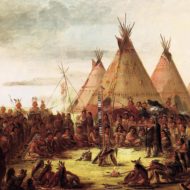
          The Thanksgiving holiday season is a time when Indian 
     history and culture are frequently discussed in the 
     schools. Unfortunately, the information and materials 
     available to teachers are often incomplete or stereotyped 
     in their presentation. For example, some commercially-
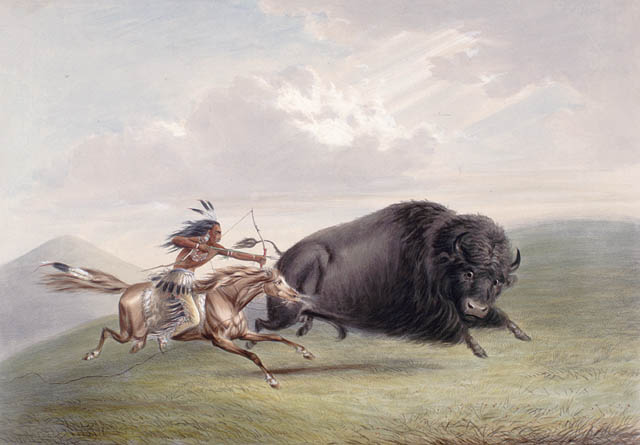
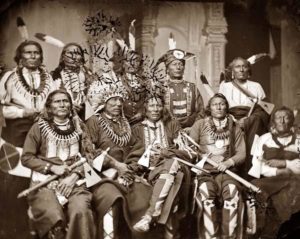
     produced bulletin board posters depict Plains-style Indians 
     with feather warbonnets, tipis in the background, and 
     horses tied nearby, sitting down to dinner with the 
     Pilgrims. While these images are popular, they do not 
     accurately represent the unique culture of the New England 
     tribes, whose lifestyle was quite different than that of 
     the Plains Indian stereotype. In addition, some books make 
     brief mention of the critical assistance given by the 
     Indians to the Pilgrims and tend to leave readers with the 
     mistaken impression that all participants at the 
     Thanksgiving feast remained friends for many years to come. 

          This unit provides additional information about the 
     Indians of the North-east culture area where the first 
     Thanksgiving took place. It includes art projects and other 
     activities teachers can use for expanding and enriching 
     their instruction. It is hoped that these materials will 
     enable teachers to better portray the events surrounding 
     the first Thanksgiving. 

     -- Cathy Ross, Mary Robertson and Roger Fernandes

                   THE PLYMOUTH THANKSGIVING STORY

          When the Pilgrims crossed the Atlantic Ocean in 1620, 
     they landed on the rocky shores of a territory that was 
     inhabited by the Wampanoag (Wam pa NO ag) Indians. The 
     Wampanoags were part of the Algonkian-speaking peoples, a 
     large group that was part of the Woodland Culture area. 
     These Indians lived in villages along the coast of what is 
     now Massachusetts and Rhode Island. They lived in round-
     roofed houses called wigwams. These were made of poles 
     covered with flat sheets of elm or birch bark. Wigwams 
     differ in construction from tipis that were used by Indians 
     of the Great Plains. 

          The Wampanoags moved several times during each year in 
     order to get food. In the spring they would fish in the 
     rivers for salmon and herring. In the planting season they 
     moved to the forest to hunt deer and other animals. After 
     the end of the hunting season people moved inland where 
     there was greater protection from the weather. From 
     December to April they lived on food that they stored 
     during the earlier months. 

          The basic dress for men was the breech clout, a length 
     of deerskin looped over a belt in back and in front. Women 
     wore deerskin wrap-around skirts. Deerskin leggings and fur 
     capes made from deer, beaver, otter, and bear skins gave 
     protection during the colder seasons, and deerskin 
     moccasins were worn on the feet. Both men and women usually 
     braided their hair and a single feather was often worn in 
     the back of the hair by men. They did not have the large 
     feathered headdresses worn by people in the Plains Culture 
     area. 

          There were two language groups of Indians in New 
     England at this time. The Iroquois were neighbors to the 
     Algonkian-speaking people. Leaders of the Algonquin and 
     Iroquois people were called "sachems" (SAY chems). Each 
     village had its own sachem and tribal council. Political 
     power flowed upward from the people. Any individual, man or 
     woman, could participate, but among the Algonquins more 
     political power was held by men. Among the Iroquois, 
     however, women held the deciding vote in the final 
     selection of who would represent the group. Both men and 
     women enforced the laws of the village and helped solve 
     problems. The details of their democratic system were so 
     impressive that about 150 years later Benjamin Franklin 
     invited the Iroquois to Albany, New York, to explain their 
     system to a delegation who then developed the "Albany Plan 
     of Union." This document later served as a model for the 
     Articles of Confederation and the Constitution of the 
     United States. 

          These Indians of the Eastern Woodlands called the 
     turtle, the deer and the fish their brothers. They 
     respected the forest and everything in it as equals. 
     Whenever a hunter made a kill, he was careful to leave 
     behind some bones or meat as a spiritual offering, to help 
     other animals survive. Not to do so would be considered 
     greedy. The Wampanoags also treated each other with 
     respect. Any visitor to a Wampanoag home was provided with 
     a share of whatever food the family had, even if the supply 
     was low. This same courtesy was extended to the Pilgrims 
     when they met. 

          We can only guess what the Wampanoags must have 
     thought when they first saw the strange ships of the 
     Pilgrims arriving on their shores. But their custom was to 
     help visitors, and they treated the newcomers with 
     courtesy. It was mainly because of their kindness that the 
     Pilgrims survived at all. The wheat the Pilgrims had 
     brought with them to plant would not grow in the rocky 
     soil. They needed to learn new ways for a new world, and 
     the man who came to help them was called "Tisquantum" (Tis 
     SKWAN tum) or "Squanto" (SKWAN toe). 

          Squanto was originally from the village of Patuxet (Pa 
     TUK et) and a member of the Pokanokit Wampanoag nation. 
     Patuxet once stood on the exact site where the Pilgrims 
     built Plymouth. In 1605, fifteen years before the Pilgrims 
     came, Squanto went to England with a friendly English 
     explorer named John Weymouth. He had many adventures and 
     learned to speak English. Squanto came back to New England 
     with Captain Weymouth. Later Squanto was captured by a 
     British slaver who raided the village and sold Squanto to 
     the Spanish in the Caribbean Islands. A Spanish Franciscan 
     priest befriended Squanto and helped him to get to Spain 
     and later on a ship to England. Squanto then found Captain 
     Weymouth, who paid his way back to his homeland. In England 
     Squanto met Samoset of the Wabanake (Wab NAH key) Tribe, 
     who had also left his native home with an English explorer. 
     They both returned together to Patuxet in 1620. When they 
     arrived, the village was deserted and there were skeletons 
     everywhere. Everyone in the village had died from an 
     illness the English slavers had left behind. Squanto and 
     Samoset went to stay with a neighboring village of 
     Wampanoags. 

          One year later, in the spring, Squanto and Samoset 
     were hunting along the beach near Patuxet. They were 
     startled to see people from England in their deserted 
     village. For several days, they stayed nearby observing the 
     newcomers. Finally they decided to approach them. Samoset 
     walked into the village and said "welcome," Squanto soon 
     joined him. The Pilgrims were very surprised to meet two 
     Indians who spoke English. 

          The Pilgrims were not in good condition. They were 
     living in dirt-covered shelters, there was a shortage of 
     food, and nearly half of them had died during the winter. 
     They obviously needed help and the two men were a welcome 
     sight. Squanto, who probably knew more English than any 
     other Indian in North America at that time, decided to stay 
     with the Pilgrims for the next few months and teach them 
     how to survive in this new place. He brought them deer meat 
     and beaver skins. He taught them how to cultivate corn and 
     other new vegetables and how to build Indian-style houses. 
     He pointed out poisonous plants and showed how other plants 
     could be used as medicine. He explained how to dig and cook 
     clams, how to get sap from the maple trees, use fish for 
     fertilizer, and dozens of other skills needed for their 
     survival. 

          By the time fall arrived things were going much better 
     for the Pilgrims, thanks to the help they had received. The 
     corn they planted had grown well. There was enough food to 
     last the winter. They were living comfortably in their 
     Indian-style wigwams and had also managed to build one 
     European-style building out of squared logs. This was their 
     church. They were now in better health, and they knew more 
     about surviving in this new land. The Pilgrims decided to 
     have a thanksgiving feast to celebrate their good fortune. 
     They had observed thanksgiving feasts in November as 
     religious obligations in England for many years before 
     coming to the New World. 

          The Algonkian tribes held six thanksgiving festivals 
     during the year. The beginning of the Algonkian year was 
     marked by the Maple Dance which gave thanks to the Creator 
     for the maple tree and its syrup. This ceremony occurred 
     when the weather was warm enough for the sap to run in the 
     maple trees, sometimes as early as February. Second was the 
     planting feast, where the seeds were blessed. The 
     strawberry festival was next, celebrating the first fruits 
     of the season. Summer brought the green corn festival to 
     give thanks for the ripening corn. In late fall, the 
     harvest festival gave thanks for the food they had grown. 
     Mid-winter was the last ceremony of the old year. When the 
     Indians sat down to the "first Thanksgiving" with the 
     Pilgrims, it was really the fifth thanksgiving of the year 
     for them! 

          Captain Miles Standish, the leader of the Pilgrims, 
     invited Squanto, Samoset, Massasoit (the leader of the 
     Wampanoags), and their immediate families to join them for 
     a celebration, but they had no idea how big Indian families 
     could be. As the Thanksgiving feast began, the Pilgrims 
     were overwhelmed at the large turnout of ninety relatives 
     that Squanto and Samoset brought with them. The Pilgrims 
     were not prepared to feed a gathering of people that large 
     for three days. Seeing this, Massasoit gave orders to his 
     men within the first hour of his arrival to go home and get 
     more food. Thus it happened that the Indians supplied the 
     majority of the food: Five deer, many wild turkeys, fish, 
     beans, squash, corn soup, corn bread, and berries. Captain 
     Standish sat at one end of a long table and the Clan Chief 
     Massasoit sat at the other end. For the first time the 
     Wampanoag people were sitting at a table to eat instead of 
     on mats or furs spread on the ground. The Indian women sat 
     together with the Indian men to eat. The Pilgrim women, 
     however, stood quietly behind the table and waited until 
     after their men had eaten, since that was their custom. 

          For three days the Wampanoags feasted with the 
     Pilgrims. It was a special time of friendship between two 
     very different groups of people. A peace and friendship 
     agreement was made between Massasoit and Miles Standish 
     giving the Pilgrims the clearing in the forest where the 
     old Patuxet village once stood to build their new town of 
     Plymouth. 

          It would be very good to say that this friendship 
     lasted a long time; but, unfortunately, that was not to be. 
     More English people came to America, and they were not in 
     need of help from the Indians as were the original 
     Pilgrims. Many of the newcomers forgot the help the Indians 
     had given them. Mistrust started to grow and the friendship 
     weakened. The Pilgrims started telling their Indian 
     neighbors that their Indian religion and Indian customs 
     were wrong. The Pilgrims displayed an intolerance toward 
     the Indian religion similar to the intolerance displayed 
     toward the less popular religions in Europe. The 
     relationship deteriorated and within a few years the 
     children of the people who ate together at the first 
     Thanksgiving were killing one another in what came to be 
     called King Phillip's War. 

          It is sad to think that this happened, but it is 
     important to understand all of the story and not just the 
     happy part. Today the town of Plymouth Rock has a 
     Thanksgiving ceremony each year in remembrance of the first 
     Thanksgiving. There are still Wampanoag people living in 
     Massachusetts. In 1970, they asked one of them to speak at 
     the ceremony to mark the 350th anniversary of the Pilgrim's 
     arrival. Here is part of what was said: 

          "Today is a time of celebrating for you -- a time of 
     looking back to the first days of white people in America. 
     But it is not a time of celebrating for me. It is with a 
     heavy heart that I look back upon what happened to my 
     People. When the Pilgrims arrived, we, the Wampanoags, 
     welcomed them with open arms, little knowing that it was 
     the beginning of the end. That before 50 years were to 
     pass, the Wampanoag would no longer be a tribe. That we and 
     other Indians living near the settlers would be killed by 
     their guns or dead from diseases that we caught from them. 
     Let us always remember, the Indian is and was just as human 
     as the white people. 

          Although our way of life is almost gone, we, the 
     Wampanoags, still walk the lands of Massachusetts. What has 
     happened cannot be changed. But today we work toward a 
     better America, a more Indian America where people and 
     nature once again are important."

                    STUDY AND DISCUSSION QUESTIONS

     1.   Who lived on the rocky shores where the Pilgrims 
          landed? 

     2.   The Wampanoags were part of what culture area? 

     3.   In what type of homes did the Wampanoags live? 

     4.   Explain what the Wampanoags did to obtain food during 
          the different seasons of the year? 

     5.   What was the basic dress for the Wampanoag people? 

     6.   Describe the Iroquois system of government. 

     7.   Who later used this system of government as a model? 

     8.   What courtesies did the Wampanoag people extend toward 
          all visitors? 

     9.   Who was "Tisquantum" and what village was he from? 

     10.  Explain how Squanto learned to speak English. 

     11.  Why did Squanto and Samoset go to live with another 
          Wampanoag village? 

     12.  Tell four ways in which Squanto helped the Pilgrims. 

     13.  Describe the "First Thanksgiving" in your own words. 

     14.  Why was this really the fifth thanksgiving feast for 
          the Indians that year? 

     15.  What do you think would have happened to the Pilgrims 
          if they had not been helped by the Indians? 

     16.  After studying about the culture of the Wampanoags, 
          how would you react to a thanksgiving picture showing 
          tipis and Indians wearing feathered headdresses? 

     17.  Quickly re-read the lesson and as you read, make a 
          list of vocabulary words that are new to you and write 
          a definition for each one.

                         IDEAS FOR ENRICHMENT

     * Study harvest celebrations in other cultures: Asia (New 
     Year), Northwest Coast Indians (salmon feast), and Europe 
     (Oktoberfest). For further information, contact the Ethnic 
     Heritage Council of the Pacific Northwest, 1107 NE 45th, 
     Suite 315A, Seattle, Washington, 98105, 206/633-3239. 

     * Imagine for a moment that people from different cultures 
     have come to your neighborhood. How will you make them feel 
     welcome? How might you share your possessions with them? 
     What kinds of things could you do to build feelings of 
     friendship and harmony with them? 

     * Investigate agriculture in your local community. What 
     crops are grown? What time of year are they harvested? What 
     harvest fairs are celebrated in your area? 

     * Discuss religious and cultural intolerance as evidenced 
     by the problems that developed between the Indians and the 
     Pilgrims in the years following the first thanksgiving at 
     Plymouth. How do the United States Constitution and Bill of 
     Rights safeguard the freedom of religion and the rights of 
     all citizens in America today?

                   HOW TO AVOID OLD STEREOTYPES

     If you enact the story of the first thanksgiving as a 
     pageant or drama in your classroom, here are some things to 
     consider: 

     * Indians should wear appropriate clothing (see dolls on 
     pages 31 and 35). NO WARBONNETS! A blanket draped over one 
     shoulder is accurate for a simple outfit. 

     * Squanto and Samoset spoke excellent English. Other 
     Indians would have said things in the Algonkian language. 
     These people were noted for their formal speaking style. A 
     good example of their oratory would be the prayers on page 
     23. Someone could read this as part of the drama. 

     * Indians in the Woodlands area did not have tipis or 
     horses, so these should not be part of any scenery or 
     backdrop. 

     * Any food served should be authentic. The following would 
     be appropriate: 

         -- corn soup (see recipe on page 28)
         -- succotash (see recipe on page 28)
         -- white fish
         -- red meat
         -- various fowl (turkey, partridge, duck)
         -- berries (including whole cranberries)
         -- maple sugar candies
         -- corn starch candy (believe it or not, candy corn is 
            almost authentic except for the colored dyes)
         -- watercress
         -- any kind of bean (red, black, green, pinto)
         -- squash
         -- corn
         -- sweet potato
         -- pumpkin

                             BIBLIOGRAPHY

     "An Educational Coloring Book of Northeast Indians," 
     Spizzirri Publishing Company, Illinois, 1982. 

     Arber, Edward, "Plymouth Colony Records," Boston, 
     Massachusetts, 1897. 

     Armstrong, Virginia Irving, "I Have Spoken," Pocket Books, 
     New York, 1972. 

     Benton-Banai, Edward, "The Mishomis Book," Indian Country 
     Press, Inc., Saint Paul, Minn., 1979. 

     Berkhofer, Jr., Robert F, "The White Man's Indian," Vintage 
     Books, Random House, New York, 1978. 

     Blitzer, Charles, "Age of Kings," Great Ages of Man Series, 
     Time-Life Books, Time, Inc., New York, 1967. 

     Bradford, Sir William, and Winslow, Edward, "Of Plymouth 
     Plantation" and Mourt's Relation," Massachusetts Historical 
     Society Collections, Tri-centennial Edition, 1922. 

     "Chronicles of American Indian Protest," The Council on 
     Interracial Books for Children, Fawcett Pub. Inc., 
     Greenwich, Conn., 1971. 

     Epstein, Sam and Beryl, "European Folk Festivals," Garrand 
     Publishing Company, Champagne, Illinois, 1968. 

     Dalgliesh, Alice, "The Thanksgiving Story," Charles 
     Scribner's Sons, New York, 1954. 

     Forbes, Jack D., "The Indian in America's Past," Prentice 
     Hall, Inc., 1964. 

     Graff, Stewart and Polly Ann, "Squanto, Indian Adventurer," 
     Garrard Publishing Company, Illinois, 1965. 

     "Handbook of North American Indian series, Volume 15, 
     "History of the Indians of the Northeast," Smithsonian 
     Institute, Washington, D.C., 1978. 

     "Harpers' Popular Cyclopaedia of United States History," 
     Vol. 1 & 2, Harper and Brothers, Pub., Franklin Square, New 
     York, 1892. 

     Jennings, Francis, "The Invasion of America," W.W. Norton 
     and Company, Inc., New York, 1976. 

     Larsen, Charles M., "The Real Thanksgiving," Tacoma Public 
     Schools, Tacoma, Washington, 1981. 

     Leiser, Julia, "Famous American Indians and Tribes," Youth 
     Publications, Saturday Evening Post Company, 1977. 

     Ross, Cathy and Fernandes, Roger, "Woodland Culture Area," 
     Curriculum Associates, Seattle, Washington, 1979. 

     Russell, Howard S., "Indians in New England Before the 
     Mayflower," University Press of New England, Hanover, New 
     Hampshire, 1986. 

     Simmons, William S., "Spirit of the New England Tribes, 
     Indian History and Folklore 1620-1984," University Press of 
     New England, Hanover, New Hampshire, 1985.

       A THANKSGIVING PRAYER FROM THE IROQUOIS (SENECA) PEOPLE

     Gwa!   Gwa!   Gwa!
     Now the time has come!
          Hear us, Lord of the Sky!
     We are here to speak the truth,
          for you do not hear lies,
     We are your children, Lord of the Sky.

     Now begins the Gayant' gogwus
          This sacred fire and sacred tobacco
     And through this smoke
          We offer our prayers
     We are your children, Lord of the Sky.

     Now in the beginning of all things
          You provided that we inherit your creation
     You said: I shall make the earth
          on which people shall live
     And they shall look to the earth as their mother
     And they shall say, "It is she who supports us."
     You said that we should always be thankful
     For our earth and for each other
     So it is that we are gathered here
     We are your children, Lord of the Sky.

              Now again the smoke rises
              And again we offer prayers
              You said that food should be placed beside us
              And it should be ours in exchange for our labor.
              You thought that ours should be a world
              where green grass of many kinds should grow
              You said that some should be medicines
              And that one should be Ona'o
              the sacred food, our sister corn
              You gave to her two clinging sisters
              beautiful Oa'geta, our sister beans
              and bountiful Nyo'sowane, our sister squash
              The three sacred sisters; they who sustain us.

              This is what you thought, Lord of the Sky.
              Thus did you think to provide for us
              And you ordered that when the warm season comes,
              That we should see the return of life
              And remember you, and be thankful,
              and gather here by the sacred fire.
              So now again the smoke arises
              We the people offer our prayers
              We speak to you through the rising smoke
              We are thankful, Lord of the Sky.

              (Liberally translated)
              Chuck Larsen, Seneca

                             INDIAN CORN

     Corn was a very important crop for the people of the 
     northeast woodlands. It was the main food and was eaten at 
     every meal. There were many varieties of corn -- white, 
     blue, yellow and red. 

     Some of the corn was dried to preserve and keep it for food 
     throughout the winter months. Dried corn could be made into 
     a food called hominy. To make hominy, the dried corn was 
     soaked in a mixture of water and ashed for two days. When 
     the kernels had puffed up and split open, they were drained 
     and rinsed in cold water. Then the hominy was stir-fried 
     over a fire. You can buy canned hominy in most grocery 
     stores. Perhaps someone in your class would like to bring 
     some for everyone to sample. 

     Corn was often ground into corn meal, using wooden mortars 
     and pestles. The mortars were made of short logs which were 
     turned upright and hollowed out on the top end. The corn 
     was put in the hollow part and ground by pounding up and 
     down with a long piece of wood which was rounded on both 
     ends. This was called a pestle. 

     Corn meal could be used to make cornbread, corn pudding, 
     corn syrup, or could be mixed with beans to make succotash. 
     A special dessert was made by boiling corn meal and maple 
     syrup. 

     All parts of the corn plant were used. Nothing was thrown 
     away. The husks were braided and woven to make masks, 
     moccasins, sleeping mats, baskets, and cornhusk dolls. 
     Corncobs were used for fuel, to make darts for a game, and 
     were tied onto a stick to make a rattle for ceremonies. 

     Corn was unknown to the Europeans before they met the 
     Indians. Indians gave them the seeds and taught them how to 
     grow it. Today in the U.S.A., more farm land is used to 
     grow corn (60 million acres) than any other grain. 

     From: _Woodland Culture Area_, Ross/Fernandes, 1979

                           RECIPES FROM THE
                        WOODLAND CULTURE AREA

     ROAST CORN SOUP
     ('o' nanh-dah) by Miriam Lee

     SENECA

     12 ears white corn in milky stage
     1 # salt pork (lean and fat)
     1 # pinto or kidney beans

     Using low heat, take corn and roast on top of range (using 
     griddle if your stove is equipped with one) and keep 
     rotating corn until ears are a golden brown. After the corn 
     is roasted, take ears and put on foil covered cookie sheet 
     until cool enough to handle. Scrape each ear once or twice 
     With a sharp knife. Corn is ready for making soup. While 
     corn is being roasted, fill kettle (5 qt. capacity) 
     approximately 3/4 full with hot water and put on to boil 
     along with salt pork which has been diced in small pieces 
     for more thorough cooking. Beans should be sorted for 
     culls, washed twice and parboiled for approximately 35-45 
     minutes. After parboiling beans, rinse well in tepid water 
     2 or 3 times. Corn and beans should then be put in kettle 
     with pork and cooked for about 1 hour. (Note: Beans can 
     also be soaked overnight to cut cooking time when preparing 
     soup). 

     SUCCOTASH SENECA

     Ingredients
     green corn with kernels removed
     fresh shelled beans
     enough water to cover
     salt and pepper to taste
     cubed salt pork

     Mix the corn and beans and cover with water. Cook the 
     mixture over medium heat for about a half hour. (Be sure to 
     stir the mixture to avoid scorching.) Add pepper and salt 
     and salt pork if desired. 


     FROM: _Our Mother Corn_
     Mather/Fernandes/Brescia
     1981

                             STORY OF THE
                            CORN HUSK DOLL

     This legend is told by Mrs. Snow,
     a talented Seneca craftswoman.

     Many, many years ago, the corn, one of the Three Sisters, 
     wanted to make something different. She made the moccasin 
     and the salt boxes, the mats, and the face. She wanted to 
     do something different so the Great Spirit gave her 
     permission. So she made the little people out of corn husk 
     and they were to roam the earth so that they would bring 
     brotherhood and contentment to the Iroquois tribe. But she 
     made one that was very, very beautiful. This beautiful corn 
     person, you might call her, went into the woods and saw 
     herself in a pool. She saw how beautiful she was and she 
     became very vain and naughty. That began to make the people 
     very unhappy and so the Great Spirit decided that wasn't 
     what she was to do. She didn't pay attention to his 
     warning, so the last time the messenger came and told her 
     that she was going to have her punishment. Her punishment 
     would be that she'd have no face, she would not converse 
     with the Senecas or the birds or the animals. She'd roam 
     the earth forever, looking for something to do to gain her 
     face back again. So that's why we don't put any faces on 
     the husk dolls. 

     From: _Our Mother Corn_
     Mather/Fernandes/Brescia
     1981


To have a current Center For World Indigenous Studies
Publication Catalogue sent to you contact John Burrows.
Center For World Indigenous Studies
P.O. Box 2574
Olympia, WA U.S.A. 98507-2574
E-mail: jburrows@halcyon.com


Paths to Living History
"the People's Paths Site Index!"